 US Dollars



Good-to-Know| Using Column Pressure: How an Elevated Water Tank Can Supply a Pressure Washer
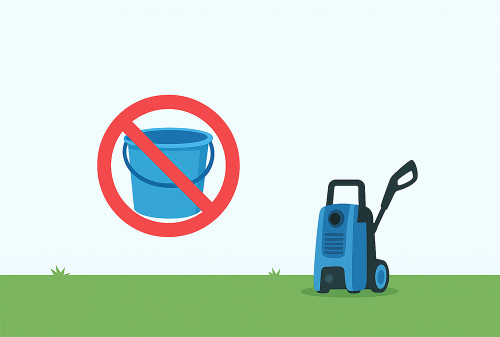
Many pressure washer owners ask whether their machine can operate using water from a bucket or tank instead of a garden hose. While drawing water directly from a bucket is not recommended for most electric pressure washers, there is a safer alternative that can work in limited situations: using a water tank positioned higher than the pressure washer to create column pressure.
For AR Blue Clean pressure washers, understanding the difference between siphoning water and supplying water through elevation is critical to protecting the pump and maintaining warranty coverage.
Why Buckets Are Not Recommended
Buckets and low-level containers require the pressure washer pump to pull water into the system. Most AR Blue Clean electric pressure washers are not self-priming, meaning they are not designed to pull water upward. This can result in inconsistent water flow, air entering the inlet line, and the risk of the pump running dry.
If the pump is allowed to run dry, im nost cases warranty coverage is forfeited on your pressure washer. Damage caused by insufficient water supply is considered misuse and most manufactures will cover it under warranty.
What Is Column Pressure?
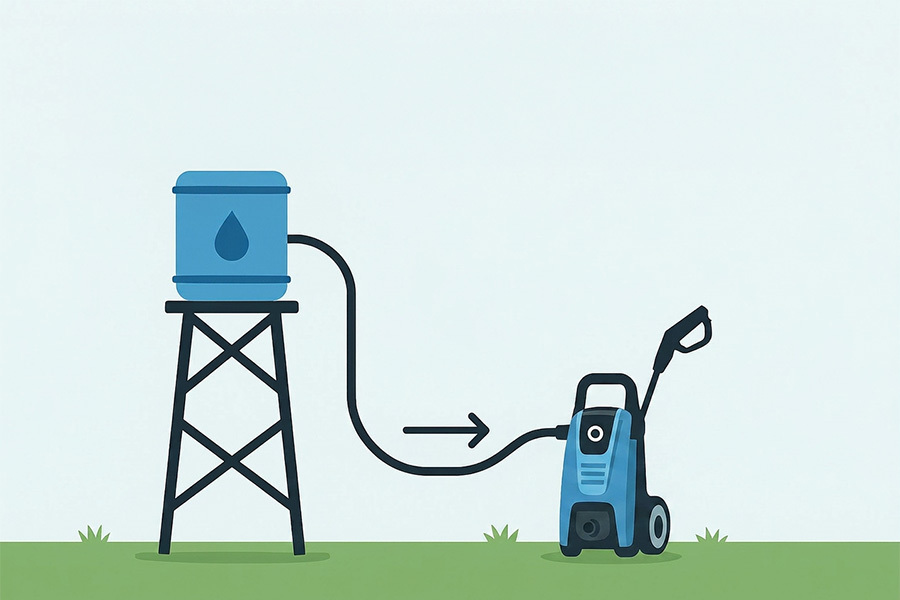
Column pressure is created when water is stored above the pressure washer inlet. Gravity pushes water downward, supplying the pump with a continuous flow rather than relying on suction.
The greater the height difference between the water tank and the pressure washer, the more inlet pressure is generated. While this does not fully replicate municipal water pressure, it can help maintain steady flow when used correctly.
Using an Elevated Water Tank Instead of a Bucket
A properly configured water tank positioned higher than the pressure washer can provide a more stable water supply than a bucket placed on the ground. This setup relies on gravity to feed water into the pump.
To reduce risk, all of the following conditions must be met:
- The water tank must be positioned above the pressure washer inlet
- The supply hose must remain fully flooded with no air pockets
- Water flow must meet the minimum GPM requirement of the unit
- A clean inlet filter must be installed and maintained
This method supplies water to the pump rather than forcing the pump to pull it, reducing stress on internal components.
Important Limitations
Gravity-fed systems can still experience reduced flow as water levels drop, and any interruption in flow increases the risk of the pump running dry.
In systems where a TSS is preseent the pump may cycle on an off as it attempts to build pressure.
Water Quality Considerations
Water used from a tank should be clean and free of debris. Standing water can contain sediment, algae, or contaminants that may damage internal pump components or clog your accessories suck as nozzles. While AR Blue Clean pressure washers include inlet filters, these are not designed to compensate for poor water quality.
Is an Elevated Tank a Replacement for a Garden Hose?
An elevated water tank should be considered a conditional alternative, not a replacement for a pressurized garden hose. For everyday residential use, a standard hose connected to a clean, pressurized water supply remains the safest and most reliable option.
Users who frequently require off-grid or mobile operation should consider equipment designed specifically for tank-fed or siphon-capable use.
Final Thoughts
AR Blue Clean pressure washers are engineered to perform best with a clean pressurized water source. However, in limited scenarios, column pressure from an elevated water tank is a safer option than drawing water directly from a bucket. The key is supplying clean consistent water flow to the pump rather than forcing it to suction water.
Always prioritize proper elevation, clean water, uninterrupted flow, and manufacturer guidance to protect performance and preserve warranty coverage. For model-specific recommendations, visit arblueclean.com.