 US Dollars


Get Connected | A Guide to Pressure Washer Hoses
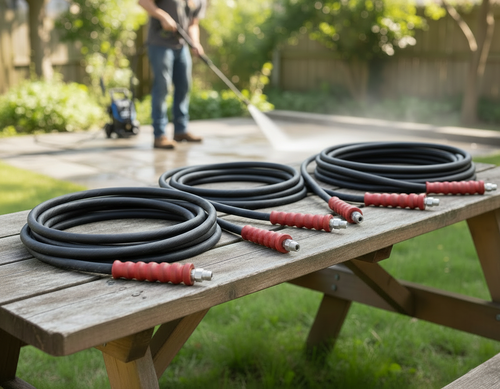
Your pressure washer hose directly affects cleaning performance, power delivery, and user experience. Choosing the right hose construction—especially with the appropriate reinforcement—ensures quicker trigger response, better pressure, and improved durability. Understanding hose design helps prevent leaks or bursts and lets you get the most from your pressure washer.
When you squeeze the trigger on your pressure washer, you want instant power—but did you know your hose plays a big role in how quickly that pressure arrives? The hose's construction, particularly whether it uses steel wire reinforcement or not, affects how much it expands under pressure. Stiffer hoses with wire reinforcement expand less, delivering the pressure wave to your gun much faster and giving you a noticeably quicker trigger response. This is just one example of how a hose's design impacts your overall cleaning experience. The right hose ensures you get the same pressure your pump produces, without leaks or sudden blow-offs.
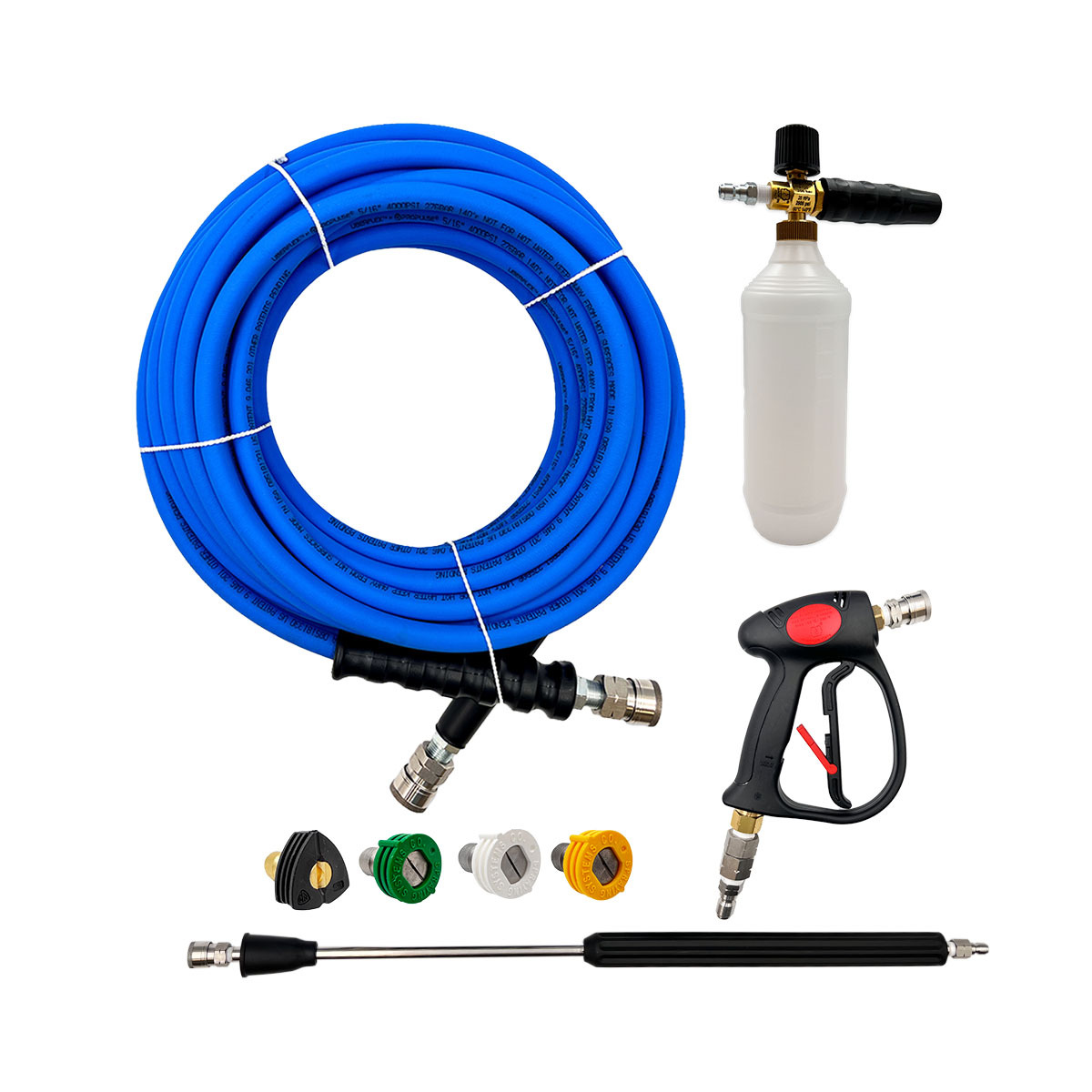
If you’re ready to explore options or need replacements, check out these Accessories Kits for a variety of replacement hoses and kits, discover the Pro accessories hose kit with Ubber Flex 50' and pro accessories for professional performance, or browse all available replacement hoses. For more detailed information and additional hose options, you can also visit our North America site.
As someone experienced in high-pressure hose engineering, I’ll guide you through the most important features: reinforcement, cover materials, connectors, and performance ratings. Follow along to discover how you can unlock the full potential of your pressure washer and achieve cleaner surfaces with less effort.
Hose Length: How Longer Hoses Affect Performance
Hose length has a direct impact on the performance of your pressure washer. Longer hoses increase water resistance, resulting in reduced pressure at the nozzle. For most users, hoses under 50 feet are ideal. Opt for the shortest hose needed, and use larger diameters for longer distances to maintain cleaning power.
While it's tempting to buy an extra-long hose for convenience, hose length can significantly impact your pressure washer's performance. The longer the hose, the greater the resistance the water faces as it travels through, leading to a noticeable pressure drop by the time it reaches the spray gun. For most consumer applications under 50 feet, pressure loss is minor. However, if you use 75 feet or more—especially on lower-powered units—the water pressure at the nozzle may decrease enough to affect cleaning power. Whenever possible, choose the shortest hose that allows you to reach your work area comfortably, and consider using heavier gauge (larger diameter) hoses for long distances to minimize loss.
Hose Reinforcement: The Internal Structure That Drives Performance
Pressure washer hoses rely on different types of reinforcement to ensure safety and performance. The reinforcement layer inside the hose determines its strength, maximum pressure rating, and durability. Choosing the right kind of reinforcement can mean better longevity, improved trigger response, and a safer, more efficient pressure washing experience.
Inside every pressure washer hose sits a reinforcement layer. This core feature is central to the hose’s strength, pressure tolerance, and durability.
Textile Braid Reinforcement
Textile braids use woven synthetic fibers, usually durable polyester, making these hoses lightweight and easy to handle. Designed for light-to-medium pressure washers (up to ~3,100 PSI), textile-braided hoses are ideal for homeowners seeking flexibility and convenience. However, since textile fibers stretch more under pressure, trigger response is slower compared to stiffer hoses.
Wire Braid Reinforcement
Wire braid hoses rely on high-tensile steel for reinforcement. These are built tough for demanding jobs, offering higher pressure ratings (3,000–4,000+ PSI), reduced expansion under pressure, and significantly quicker trigger response. They also withstand heat better and last longer, making them the preferred choice for commercial and heavy-duty users.
Hose Cover (Outer Jacket): Impact on Handling and Durability
The outer cover of a pressure washer hose is essential for durability and ease of use. It shields the hose from abrasion, harsh weather, and everyday wear, while the cover material directly impacts flexibility, resistance to damage, and how smoothly the hose moves during cleaning. Choosing the right cover ensures lasting performance and easier handling.
Polyurethane Covers
Polyurethane offers a slick, low-friction finish that slides easily over rough surfaces. Expect less snagging, easier movement around obstacles, and exceptional abrasion resistance. Many professionals prefer polyurethane for its smooth handling and long lifespan.
Rubber Covers
Rubber covers are renowned in commercial cleaning for their outstanding heat resistance (up to 250°F), rugged durability, and superior protection against abrasion, grease, oil, and chemicals. If your work involves hot water or dragging hoses across rough surfaces, rubber is your best bet.
Thermoplastic Covers
Thermoplastic hoses are lightweight, flexible, and easy to coil, making them a top pick for occasional home use with cold water pressure washers. However, they’re not suitable for hot water and offer less durability under tough conditions.
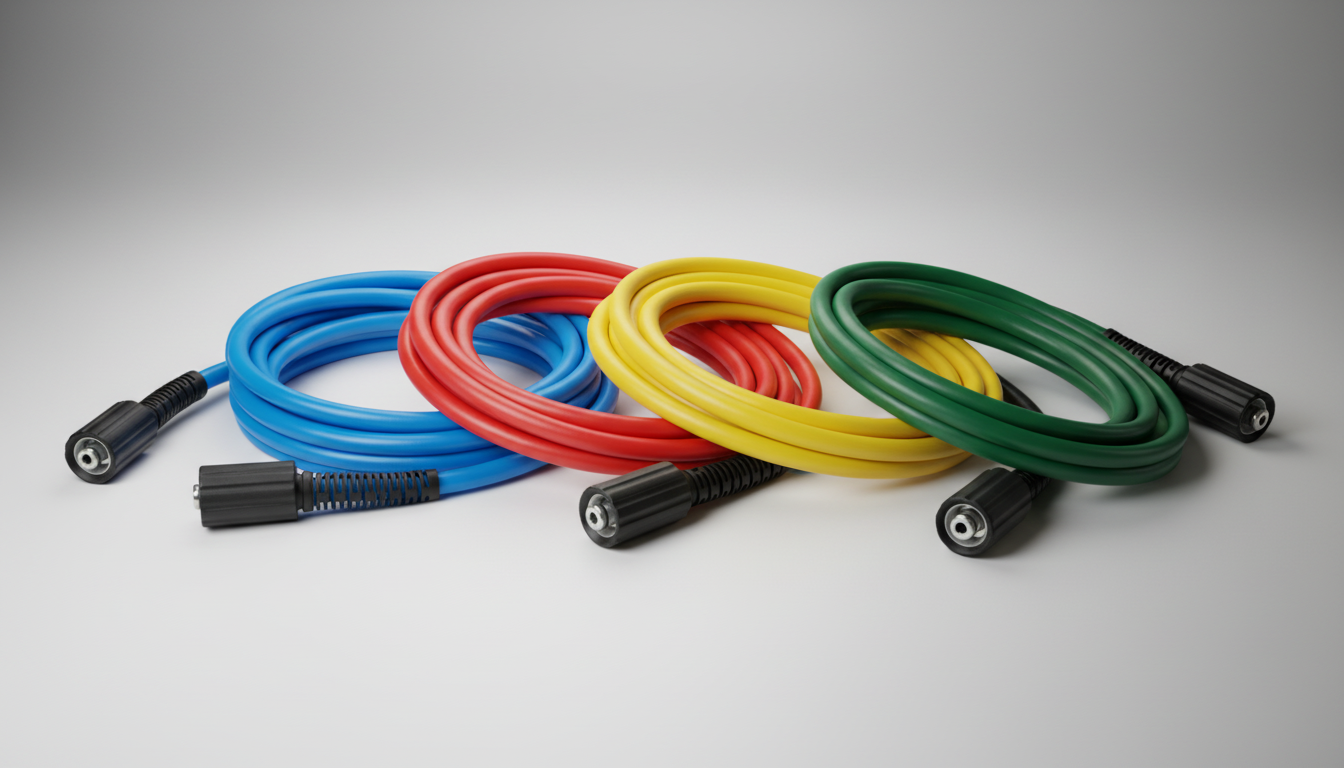
Connectors: Ensuring Compatibility and Preventing Leaks
Choosing the right pressure washer hose connector is essential to prevent leaks, ensure reliable performance, and make switching accessories easy. From M22 threaded connectors to quick-connect and NPT/BSP fittings, understanding your hose and equipment requirements will help you avoid compatibility issues and get the most from your pressure washer.
Selecting the correct hose connector is critical for achieving a leak-free, secure connection between your hose, washer, and accessories.
M22 Connectors
Most consumer hoses come with M22 threaded fittings, but watch out—there are M22-14 and M22-15 variants, differing by just one millimeter in diameter. They aren’t interchangeable without an adapter, so always confirm the specifications before connecting.
Quick-Connect (QC) Fittings
QC systems make switching accessories fast and easy. The 1/4-inch size is common on consumer attachments, while 3/8-inch QCs are suited for pro setups. Each QC has a plug (inserting end) and a coupler (receiving end)—ensure you have matching sets.
NPT and BSP Threaded Fittings
Some heavy-duty equipment uses NPT (US) or BSP (European) threads. These threads are not compatible with each other without an adapter, and the proper size is sometimes noted using dash sizes (e.g., -04 for 1/4-inch). Always check your gear to avoid mismatches.
The Four Key Hose Ratings You Must Check
To choose the best pressure washer hose, always review four key ratings: working pressure, burst pressure, impulse life, and temperature rating. These ratings help prevent accidents, ensure compatibility with your equipment, and maximize both safety and cleaning performance. Understanding these factors lets you pick the right hose for your needs.
Understanding hose ratings can prevent dangerous failures and ensure top performance from your equipment.
Working Pressure (Max)
This is the highest pressure the hose can safely handle during use. Textile braid hoses are typically rated to 3,100 PSI, while wire braid hoses often handle 3,000–4,000 PSI or more. Always use a hose rated equal to or greater than your washer’s output.
Burst Pressure (Min)
Burst pressure indicates the point where the hose will rupture, usually specified at four times the working pressure for safety in pressure washing (compared to only three times for garden hoses). For example, a 4,000 PSI hose should have a burst pressure of at least 16,000 PSI—impressive, but never to be used as a daily limit.
Impulse Life
Each time you pull the trigger, a surge stresses the hose. Impulse life measures how many such cycles the hose can handle. Premium hoses can survive 200,000 or more cycles, making them ideal for daily professional use.
Temperature Rating
If your washer uses hot water, temperature tolerance is key. Hot-water hoses handle up to 250°F, but not all hoses are rated for heat. Most cold water and consumer hoses are designed to handle temperatures up to 140°F. Always check this rating—exceeding it can cause the hose to fail suddenly or weaken over time.
Reading the Hose Jacket (Layline)
Manufacturers typically print key specs directly on the hose’s surface, known as the layline. It lists the hose series, size, maximum pressure, safety standards, and batch code. Keep note of this information for easy future replacement or reference.
How an Expert Evaluates a Hose: The Simple Checklist
To select the best pressure washer hose, follow a practical five-step checklist. This ensures you get proper reinforcement, the right hose cover, compatible connectors, correct performance ratings, and the trigger response you want. With this proven approach, you’ll make confident purchase decisions for safe, effective, long-lasting cleaning.
Make the right choice every time by following this five-step decision framework:
- Match Reinforcement to Pressure:
For light-duty use, pick textile braid. For commercial or demanding jobs, choose wire braid for added strength and faster trigger response. - Choose the Right Cover:
Polyurethane is best for flexibility and ease of movement. For rugged or hot water applications, rubber is essential. For light, occasional use, thermoplastic is convenient. - Verify Connectors:
Check if you need M22-14 or M22-15. Match QC sizes to your accessories (1/4-inch for most consumers, 3/8-inch for pros). Use NPT/BSP only if your equipment specifies it. - Check the Four Performance Ratings:
Confirm working pressure, burst pressure, impulse life, and temperature rating before purchasing. - Consider Trigger Response:
Want a snappier feel? Wire braid hoses expand less, delivering maximum pressure more quickly to your gun.
Upgrade Your Washing Experience Today
Choosing the right pressure washer hose boosts cleaning efficiency, durability, and safety. Consider reinforcement, outer cover, connector type, and hose ratings before you buy. A well-matched hose ensures reliable power delivery, prevents leaks, and maximizes your machine’s performance for any task.
Your pressure washer hose is more than just a connection—it's a vital part of your cleaning system. Choosing the right combination of reinforcement, cover, connectors, and ratings can dramatically improve both performance and durability.Now you know a key professional secret: a stiffer, wire-braided hose not only lasts longer—it delivers a superior washing experience with faster response and more consistent power. Take a look at your current setup, invest in the perfect heavy-duty replacement, and get ready to achieve spotless results with less hassle!