 US Dollars


Good-to-Know | Choosing the Right Pressure Washer: PSI, GPM, CU & What Really Matters
The pressure washer with the highest PSI is rarely all you should consider.
Choosing the right pressure washer isn’t about buying the biggest number on the box. Real‑world cleaning performance comes from understanding how pressure, water flow, electrical limits, and how performance is measured all work together. Many buyers overspend, underperform, or damage surfaces because they focus on PSI alone.
This guide explains what really matter when, so you can avoid common misconceptions and choose the right AR Blue Clean pressure washer for real‑world cleaning jobs.
Why This Guide Matters
Pressure washer specifications are often misunderstood or oversimplified. True cleaning performance depends on balancing:
- PSI (pressure)
- GPM (water flow)
- CU (Cleaning Units = PSI × GPM)
- Industry testing methods that verify performance
- Modern electrical safety requirements
When these factors are understood together, it becomes much easier to select the right machine—and avoid buying more power than you need.
The Three Specs That Drive Cleaning Performance
1) PSI (Pounds per Square Inch)
What it does
PSI is the stripping force. It determines how hard the water hits the surface and how effectively it breaks the bond between dirt and the material you’re cleaning.
What it doesn’t do
Higher PSI does not guarantee faster cleaning. Excessive pressure can slow work by requiring longer rinse times and increases the risk of damaging siding, vehicles, wood, and decorative concrete.
PSI starts the cleaning process, but it doesn’t finish it.
2) GPM (Gallons per Minute)
GPM controls rinsing power. Once grime is loosened, GPM determines how quickly it can be flushed off the surface.
For larger areas such as patios, garage floors, driveways, and shop spaces, GPM often has a greater impact on total cleaning time than PSI. In many real‑world cases, higher flow cleans faster than higher pressure.
GPM is the key to efficiency.
3) CU (Cleaning Units = PSI × GPM)
Cleaning Units can provide a simple way to compare overall capability by combining pressure and flow into one number.
Two pressure washers with similar CU can perform very differently depending on how PSI and GPM are balanced. A machine with moderate pressure and strong flow often cleans faster and safer than one with extreme PSI and low flow.
CU is useful for comparison—but it should not be used alone to make a buying decision.
Real‑World Example Using Published Max Specifications
| Model | Max PSI | Max GPM | Cleaning Units (CU) | What It Means in Use |
|---|---|---|---|---|
| XO2000 | 2000 | 1.9 | 3800 | Balanced consumer unit with a mix of pressure and moderate flow |
| BM3300 | 3300 | 1.3 | 4290 | Highest PSI and CU, but lower flow can slow rinsing on large surfaces |
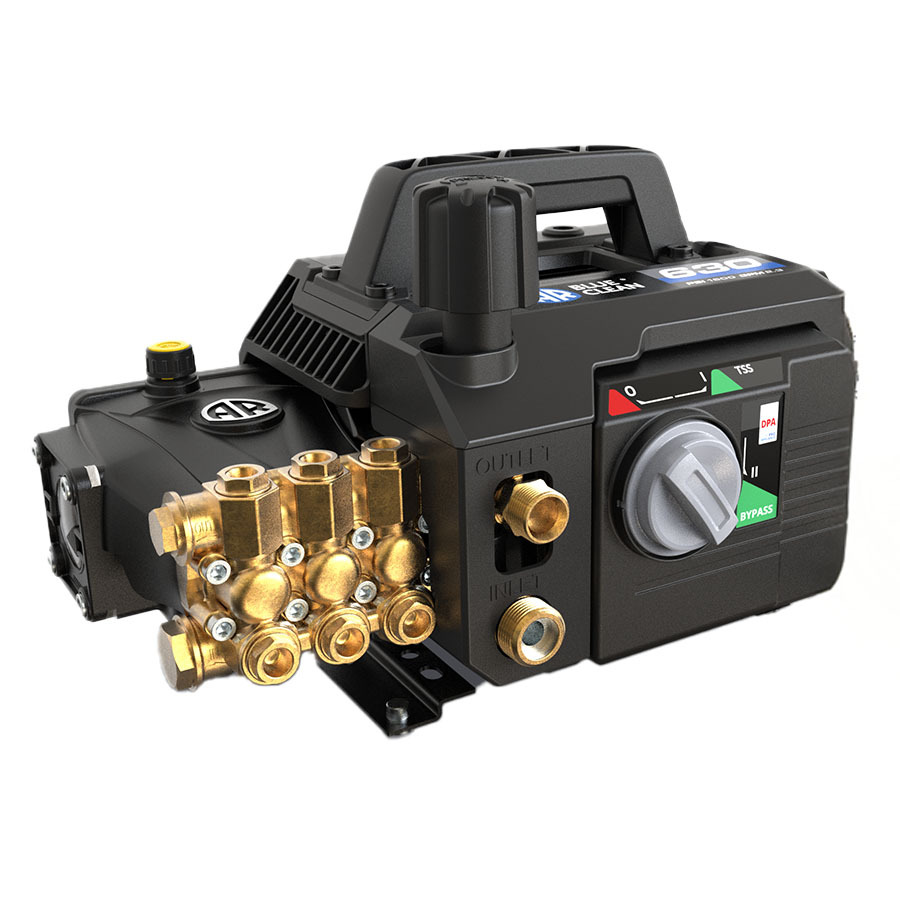
| AR630 V2 | 1600 | 2.3 | 3680 | Lower PSI with strong flow—often faster for real-world cleaning tasks like Car detailing |
| RCA3‑PRO | 1350 | 3.0 | 4050 | Flow-focused design—maximizes rinsing speed and job efficiency |
Important: These values are based on published maximum specifications. Actual working pressure and flow at the nozzle will vary.
What this shows: Although the BM3300 has the highest PSI and CU, models like the AR630 V2 and RCA3‑PRO can often complete cleaning tasks faster because higher water flow removes debris more efficiently.
Takeaway: Cleaning Units are helpful for comparison, but the balance of PSI and GPM—especially flow—has a greater impact on real‑world cleaning performance.
Performance Standards and What to Look For
Pressure washer performance is not arbitrary. Across the industry, established testing methods exist to define how PSI and GPM should be measured and reported, helping ensure ratings reflect real, repeatable performance.
When reviewing specifications, look for:
- Clearly stated PSI and GPM values
- Consistent numbers across product documentation
- Ratings that align with electrical limits
- Certification standards
Be cautious of vague terms, and crazy perfomance ranges that other wise seem very high!
Electrical Safety Standards
Electric pressure washers should comply with recognized North American safety standards such as UL and CSA, which evaluate electrical insulation, grounding, water exposure protection, motor safety, and GFCI protection.
Electric Pressure Washer Performance: What’s Realistic
- PSI: 1300–3000
- Consumer electric flow: approximately 1.1–2.5 GPM
- Professional electric systems: 3.0-3.5 GPM
Electric pressure washers are often preferred for no VOC emissions, reduced noise, minimal maintenance, and consistent output.
Matching Jobs to Specs (and Why GPM Often Wins)
| Job Type | Recommended PSI | Recommended GPM | Why This Works |
|---|---|---|---|
| Cars, bikes, small equipment | 1,000–1,600 | ≥ 1.5 | Protects finishes while rinsing efficiently |
| Siding, fencing, furniture | 1,500–2,000 | 1.6–2.0+ | Balanced pressure removes grime safely |
| Patios, pavers, driveways | 1,800–2,700 | 2.0–3.0+ | Higher flow dramatically speeds large surfaces |
| Heavy soil, prep work | 1,500–2,300 | 2.3–3.0+ | Flow plus detergent outperforms high pressure |
Performance insight: A 1500 PSI / 2.0 GPM washer can often out‑clean a 2000 PSI / 1.5 GPM unit because debris is removed faster.
Safety Essentials (Non‑Negotiable)
- Always use a GFCI‑protected outlet
- Keep power connections elevated and dry
- Never remove the grounding prong
- Test the GFCI before each use
- Never run gas units indoors
- Treat injection injuries as emergencies
How to Read a Spec Label the Right Way
- Verify PSI and GPM are clearly stated
- Look for recognized electrical safety certifications
- Prioritize GPM for large surfaces
- Match the washer the correct a 15A or 20A circuit
AR Blue Clean Model Examples by Use Case
AR675 — High‑Performance 15A Model
2000 PSI at 1.7 GPM. Ideal for vehicles and smaller surfaces.
AR630 — Pro Electric Dual‑Mode
Approximately 1600 PSI at 2.3 GPM. Designed for greater cleaning on larger surfaces. Exellent for car detailing.
RCA3‑PRO — High‑Flow Professional System
≈3.0 GPM. Built for speed‑critical commercial workflows. Excellent for large machines and Larger sufaces that may be indoors.
The Bottom Line
- Balanced PSI + GPM beats max PSI
- Trust transparent specs and safety standards
- Match your washer to your electrical circuit
- Use proper technique for faster, safer results
Choosing the right pressure washer isn’t about buying the most power available, but selecting the right power for how and what you clean.
Have more questions? Email us at info@arblueclean.com or
Visit arblueclean.com for product details and accessories.